

Hildegard's Way
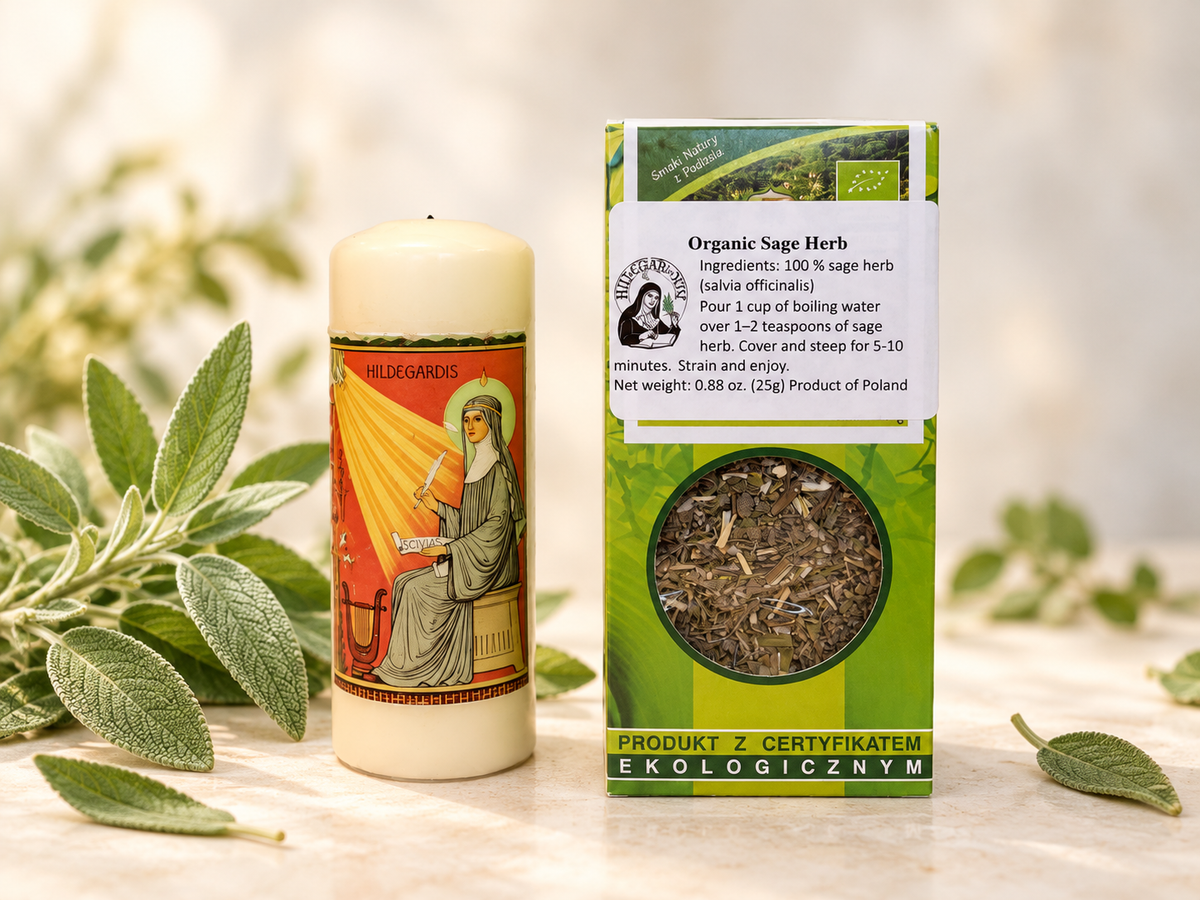
Organic Sage Leaf (Salvia officinalis) – 0.88 oz (25 g)
Organic Sage Leaf (Salvia officinalis) – 0.88 oz (25 g)
Couldn't load pickup availability
A treasured herb in St. Hildegard's teachings, traditionally valued for supporting digestion, respiratory comfort, and the body's natural balance.
Sage (Salvia officinalis) is a wonderfully aromatic herb with a long history of use in herbal traditions. Known for its distinctive earthy fragrance, slightly peppery flavor, and naturally warming character, sage has been appreciated for centuries as both a culinary herb and a traditional herbal preparation.
In the writings of St. Hildegard of Bingen, sage holds a special place among herbs traditionally used to support the body's natural balance, particularly when dealing with excess phlegm, digestive discomfort, loss of appetite, and urinary difficulties.
St. Hildegard on Sage
In her Physica, St. Hildegard writes:
"Sage (...) is useful against ill humors, since it is dry. It is good to eat raw or cooked, for one whom noxious humors are troubling, since it checks them."
She also recommends sage as part of one's daily nourishment:
"Take sage and pulverize it. Eat this powder with bread and it will diminish the superfluity of harmful humors in you."
For Excess Phlegm and Unpleasant Breath
St. Hildegard describes a traditional preparation involving sage cooked in wine:
"Anyone who abounds in excess phlegm, or who has stinking breath, should cook sage in wine, strain it through a cloth, and drink it often. The evil humors and phlegm will be diminished."
For Loss of Appetite
St. Hildegard recommends preparing a condiment with sage, chervil, garlic, and vinegar:
"Someone who disdains eating should take sage, and a little less chervil, and a bit of garlic, and pound these together with vinegar, and so make a condiment. He should dip foods which he wishes to eat in it, and he will have an appetite for eating."
For Difficulty Holding Urine
St. Hildegard also describes the use of sage in cases of urinary difficulties, which she associated with what she called the "coldness of the stomach":
"If anyone is unable to hold his urine because of the coldness of his stomach, he should cook sage in water, and strain it through a cloth. He should often drink it warm, and he will be cured."
These observations reflect St. Hildegard's understanding of sage as an herb that helps restore harmony within the body. Her descriptions belong to a medieval medical tradition and should not be understood as established clinical treatments for urinary incontinence or other medical conditions.
Traditional Benefits of Sage
In Hildegardian and European herbal traditions, sage has been valued for several purposes:
- Respiratory Comfort: Traditionally used when dealing with excess mucus and phlegm.
- Digestive Support: Appreciated for its role in supporting comfortable digestion.
- Fresh Breath: Traditionally used to help maintain oral freshness.
- Appetite Support: Included in traditional herbal preparations intended to encourage appetite.
- Urinary Comfort: Described by St. Hildegard in preparations for difficulty controlling urination.
- Natural Balance: Valued by St. Hildegard for addressing what she described as an excess of harmful humors.
Traditional Hildegardian Preparations
St. Hildegard describes several ways to incorporate sage into daily life.
Sage with Bread
Finely crush or grind dried sage leaves and sprinkle a small amount over bread or food.
Sage Infusion
Steep sage leaves in hot water, then strain. This simple preparation offers a pleasantly aromatic herbal infusion.
Sage and Herb Condiment
St. Hildegard describes combining sage with a smaller amount of chervil and a little garlic, crushing the herbs together with vinegar to create a flavorful condiment traditionally used to encourage appetite.
Sage in Cooking
Add sage to soups, roasted vegetables, poultry, and other savory dishes. Its distinctive aroma makes it a wonderful addition to traditional home cooking.
Carefully Grown and Prepared in Poland
Our Organic Sage Leaf is produced by Dary Natury (Gifts of Nature) in Koryciny, Poland, a company known for its dedication to traditional herbs and natural products.
Dary Natury sources herbs from organic growers in Poland, including regions of remarkable natural purity where the surrounding environment remains largely untouched by industrial development.
The herbs are carefully dried and kept in relatively large pieces whenever possible to preserve their natural qualities. Keeping leaves and other plant parts more intact helps protect delicate aromatic compounds and essential oils, some of which may be lost when herbs are crushed or finely ground too early.
Product Information
Ingredients: 100% Organic Sage Leaf (Salvia officinalis)
Net Weight: 0.88 oz (25 g)
Product of Poland
Producer: Dary Natury (Gifts of Nature), Koryciny, Poland
Storage: Store in a cool, dry place, protected from light and moisture.
The traditional uses described above are shared for educational purposes and reflect the teachings of St. Hildegard of Bingen. They are not intended to diagnose, treat, cure, or prevent any disease. Concentrated sage preparations and frequent medicinal consumption may not be suitable during pregnancy, breastfeeding, or for individuals with seizure disorders. Persistent urinary symptoms should be evaluated by a healthcare professional.